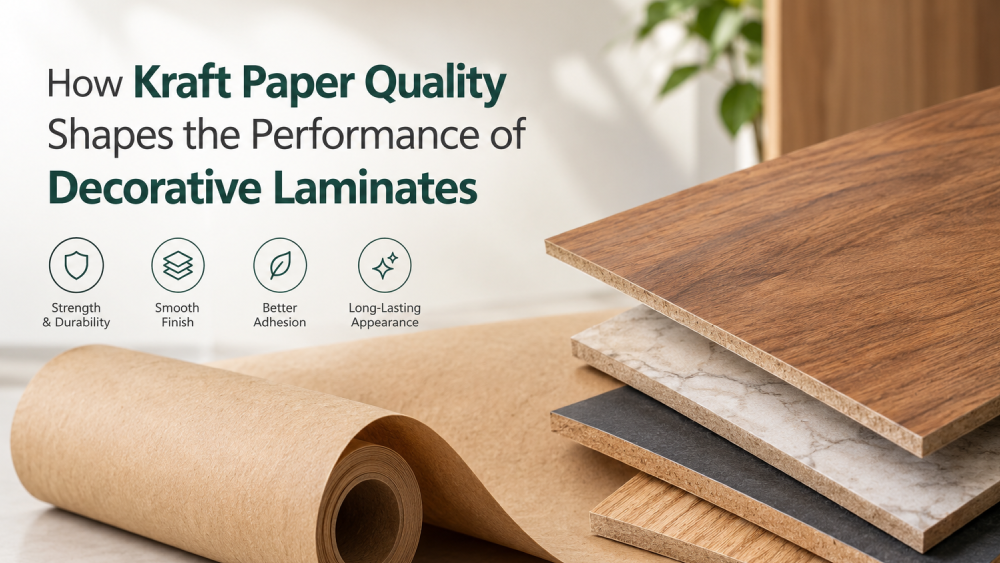
How Kraft Paper Quality Shapes the Performance of Decorative Laminates

The laminate surfaces used in offices, kitchens, retail interiors, and commercial furniture are the visible output of a manufacturing process that begins with paper. The quality and consistency of the kraft paper used as a base layer in decorative laminates determines how the finished product absorbs resin, bonds under pressure, resists moisture, and holds its surface integrity across years of use.

For laminate manufacturers and HPL producers, this is not an abstract specification consideration. The wrong paper grade creates problems that surface only after production: uneven resin absorption, inconsistent surface finish, dimensional instability, or delamination under humidity. Choosing the right paper supplier is a technical decision with direct consequences for production consistency and end-product quality.

The Role of Kraft Paper in Laminate Construction

Decorative laminates, whether high-pressure (HPL) or low-pressure (LPL), are built from layered paper sheets saturated with thermosetting resins and bonded under heat and pressure. The structural core of the laminate depends on absorbent kraft paper, specifically designed to accept resin uniformly during the impregnation process.

What makes kraft paper suitable for laminate manufacturing is a combination of controlled properties: porosity that allows resin penetration at the correct rate, tensile strength that prevents tearing during roll handling and pressing, and dimensional stability that holds consistent across roll widths and production batches. Variation in any of these properties produces variation in the finished laminate.

The decorative surface layer is what buyers and designers see. The kraft layers beneath it are what give the laminate its structural depth, impact resistance, and long-term performance.

Key Paper Properties That Laminate Manufacturers Should Specify

Resin Absorption Rate

The porosity of the kraft paper governs how quickly and how completely resin penetrates during impregnation. Under-absorption produces dry spots and surface defects. Over-absorption leads to brittleness and reduced flexibility. Laminate manufacturers should work closely with their paper supplier to align paper porosity with the specific resin systems in use.

Tensile Strength and Tear Resistance

Kraft paper moves through mechanical tension during web handling, slitting, and press loading. Paper that tears under process conditions creates waste, production stops, and quality inconsistency. Industrial-grade absorbent kraft paper is engineered to handle these loads reliably across long production runs.

Moisture Content and Dimensional Stability

Kraft paper with variable moisture content before impregnation causes dimensional changes that carry through to the finished laminate surface. Consistent moisture levels from roll to roll are a basic supplier quality standard that matters significantly in production.

Grammage Consistency

The GSM of the kraft paper must hold within specified tolerances across each roll and across batches. GSM variation changes the structural thickness of the laminate, producing products that fall outside specification and require costly rework or rejection.

The Sustainability Case for Recycled Absorbent Kraft Paper

Laminate manufacturers are facing questions from their downstream customers about the sustainability of input materials. Recycled absorbent kraft paper is an established alternative to virgin kraft in laminate construction, and its environmental credentials are well-documented.

Each tonne of recycled kraft paper used in place of virgin pulp saves approximately 17 trees, 7,000 gallons of water, and 4,000 kilowatts of energy, while reducing process-related air emissions compared to conventional kraft pulping.

For manufacturers supplying to construction and interior design markets where green building certification is a customer requirement, using recycled-content laminate paper supports the materials documentation needed for LEED and IGBC credit claims.

Working With Pudumjee Paper Products

We manufacture absorbent kraft paper specifically for the decorative laminate industry. Our products are produced to consistent grammage, porosity, and tensile specifications. We work directly with laminate manufacturers to calibrate paper properties to their production process and resin systems.

Our range includes both standard and recycled-content grades, giving manufacturers the flexibility to meet sustainability targets without significant process changes.

If you are evaluating your kraft paper supply for laminate production, our team can provide technical consultation, roll specifications, and trial material matched to your production requirements.

Contact our technical sales team at pudumjee.com to discuss kraft paper specifications for your laminate production.
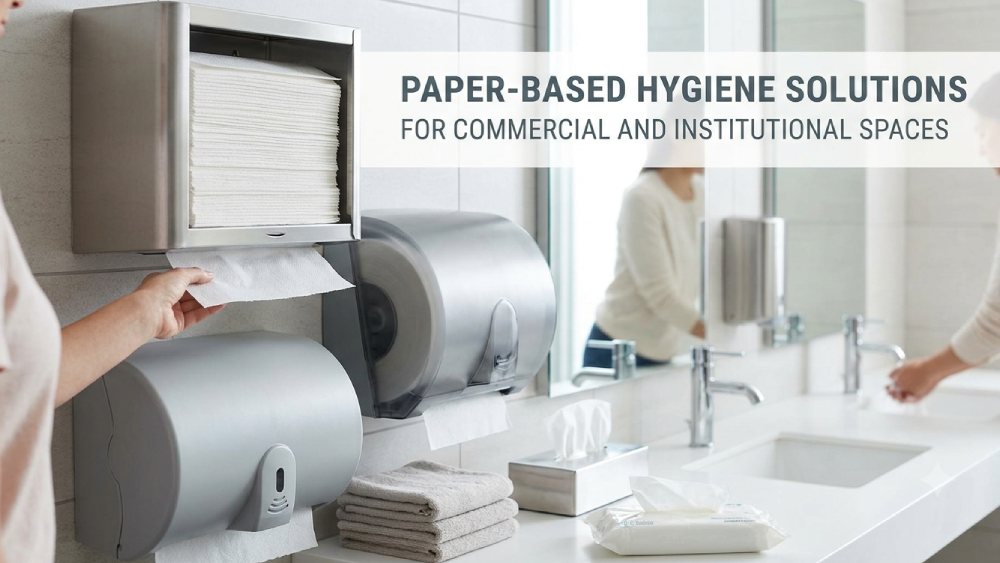
Paper-Based Hygiene Solutions for Commercial and Institutional Spaces

The hygiene paper products in a commercial restroom handle demand that household products are not built for. A hotel bathroom, hospital corridor facility, or airport terminal sees usage patterns that would exhaust standard consumer tissue within hours. Choosing the right paper products for these settings is not simply about softness or unit price. It involves throughput capacity, supply consistency, compliance with sanitation standards, and the environmental footprint of the product across its full lifecycle.

For facility managers and procurement teams responsible for institutional spaces, toilet paper, hand towels, and tissue are recurring operational decisions with measurable impact on cost, staff workload, and the experience of guests, patients, or employees.

Toilet Paper for High-Traffic Commercial Use

Commercial toilet paper differs from household grades in ways that matter at scale. The right specification for a high-traffic restroom dissolves faster, reducing plumbing strain and the frequency of maintenance interventions. It is supplied in roll formats designed for institutional dispensers, typically jumbo rolls or twin-roll systems, reducing replenishment frequency and therefore staff time.

Faster dissolution is not only an environmental consideration. In high-volume settings, toilet paper that breaks down quickly reduces blockage risk in high-load plumbing infrastructure. This translates directly to lower maintenance costs and fewer operational disruptions.

Sustainable grades use cellulose-based materials that meet the performance requirements of commercial use. Recycled-content options reduce dependence on virgin fibre without compromising throughput performance when specified correctly.

Tissue and Hand Towels for Institutional Restrooms

Beyond toilet paper, the two most frequently consumed hygiene paper products in commercial restrooms are facial tissue and paper hand towels.

Facial tissue for institutional use needs to be soft enough to meet guest or patient expectations but strong enough to hold together during use. It is typically supplied in interfolded formats for wall-mounted dispensers or in box formats for rooms and waiting areas. Softness grade and ply count should be matched to the context. Guest-facing applications in hospitality warrant higher grades than general office restrooms.

Paper hand towels in commercial restrooms are a consistently more hygienic choice than cloth hand towels or hot-air dryers in high-footfall settings. They are faster, reduce cross-contamination risk in immunocompromised environments such as hospitals, and are available in recycled-content grades that align with sustainable procurement targets.

The Sustainability Case for Paper-Based Hygiene

Switching from conventional hygiene paper to biodegradable and recycled-content alternatives is now a standard component of institutional sustainability programmes. The key reasons:

  • Paper from recycled or certified responsibly managed sources reduces dependence on virgin forest pulp.
  • Biodegradable formats reduce the volume and toxicity of waste processed through commercial waste streams.
  • Lighter packaging reduces transport emissions per unit across supply chain legs.
  • For facilities pursuing green building certification, sustainable paper procurement contributes to materials and resources credits under LEED and IGBC frameworks.

What Procurement Teams Should Specify

When tendering hygiene paper products for commercial facilities, the specification should address the following parameters:

  • Roll format and dispenser compatibility to avoid products that do not work with existing hardware.
  • GSM and ply count appropriate to the specific use context and usage frequency.
  • Dissolution speed for toilet paper, particularly important for facilities with older or high-load plumbing infrastructure.
  • Sustainability certifications such as FSC or PEFC covering raw material sourcing.
  • Recycled content percentage, documented with supplier declarations.
  • Minimum order quantity and delivery lead time reliability across procurement cycles.

Working With Pudumjee Paper Products

We manufacture and supply bathroom tissue, toilet paper, and paper hand towels for commercial and institutional buyers across India. Our product range is built for the scale and supply consistency that facility managers require, and we document sustainability credentials for buyers who need them for internal reporting or certification purposes.

Whether you manage procurement for a hotel chain, healthcare network, or commercial property portfolio, our team can support your process with samples, technical specifications, and volume pricing.

Visit pudumjee.com or contact our commercial sales team to discuss your institutional hygiene paper requirements.

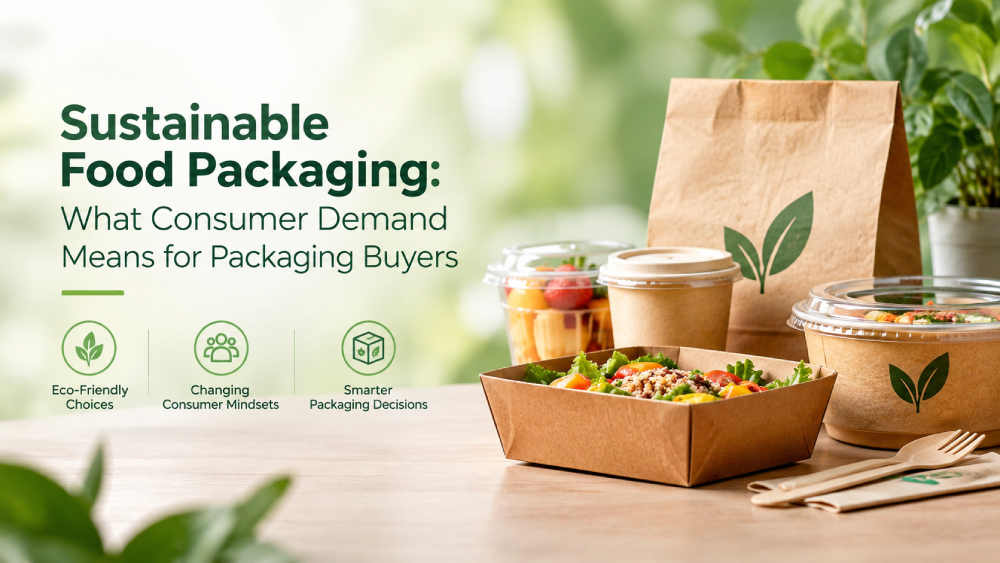
Sustainable Food Packaging: What Consumer Demand Means for Packaging Buyers

Food packaging decisions that once sat entirely within procurement are now surfacing in brand conversations. Consumer behaviour in urban India has made packaging sustainability a commercial variable, not just an ethical preference. For companies buying packaging at scale, that shift has direct implications for what they specify, source, and defend to their supply chain partners.

What the Numbers Are Telling Procurement Teams

61% of urban Indian consumers factor sustainable packaging into food purchasing decisions. 43% say they will pay more for a product with eco-friendly packaging. These are not fringe preferences. They represent a measurable demand signal that sits upstream of brand performance. A food company moving from plastic toward paper-based packaging is not making a purely environmental statement. It is responding to a commercial signal with quantifiable weight.

India generates approximately 10.2 million tonnes of plastic waste annually, with food packaging accounting for a significant share. Regulatory pressure is building alongside consumer expectation. For procurement teams, acting ahead of that pressure is considerably more cost-effective than reacting to it.

What Sustainable Food Packaging Actually Requires

The term is used loosely and often commercially. In practice, packaging qualifies as genuinely sustainable only when it satisfies three conditions simultaneously: it protects the product reliably across transit and storage, it complies with applicable food safety standards, and it has a practical end-of-life path through recycling, composting, or biodegradation.

Paper-based packaging fits this profile better than most available alternatives when the right grade is specified for the application. The shift is not sentimental. It is a response to regulatory momentum, supply chain accountability, and the cost of staying relevant with a consumer base that now reads labels differently.

Types of Paper Used in Food Packaging

Different food applications demand different paper properties. Mismatched choices lead to product spoilage, compliance gaps, and unnecessary cost. The main categories serve distinct purposes:

  • Greaseproof paper is used for bakery products, oily snacks, and fast food applications where oil migration would compromise the pack or the product inside it.
  • Parchment paper handles direct heat contact in commercial food production environments, resisting moisture and high temperature without breaking down.
  • Kraft paper suits dry food products, outer bags, and printed packaging where tensile strength and printability are the primary considerations.
  • Specialty barrier papers serve products requiring moisture or vapour control during transit and storage.

Specifying the right grade requires supplier knowledge and application understanding working together. It is not a catalogue selection exercise.

What to Specify When Sourcing

When evaluating food-grade paper suppliers, price is one input among several that matter equally in the long run:

  • Grease resistance rating tested against established standards, not supplier claim alone.
  • Food contact compliance with FSSAI requirements, and for export product lines, with EU or FDA food contact standards.
  • Documented biodegradability with clear end-of-life guidance and verifiable data, not marketing language.
  • Supplier transparency on raw material sourcing, production process, and any chemical treatments applied.

Vague environmental claims from a supplier are a gap in due diligence, not a sign of alignment.

Working With Pudumjee Paper Products

We supply greaseproof, parchment, and specialty papers for food packaging to manufacturers, quick-service restaurant chains, bakeries, and packaging converters across India. Our materials are designed for direct food contact applications and documented to support audit-ready procurement records.

If you are reviewing your food packaging paper specifications or evaluating alternatives to plastic-based materials, our team can support that process with technical consultation and samples for trial.

To discuss your food packaging paper requirements or request trial samples, contact our team at pudumjee.com or reach out to your nearest regional sales office.